24 Apr 2025
خشب شينغانغ الرقائقي البحري المُحاكي للطبيعة: ثورة في حلول الأسطح المتينة والآمنة
يتعلم أكثر >


A color MDF board offers furniture manufacturers a practical combination of a smooth fiberboard substrate and a decorative colored finish. It can be used in wardrobes, kitchen cabinets, office furniture, shelving, retail displays, and interior wall systems. Its suitability, however, depends on how well the board's substrate, surface finish, thickness, and environmental properties match the demands of the finished product.
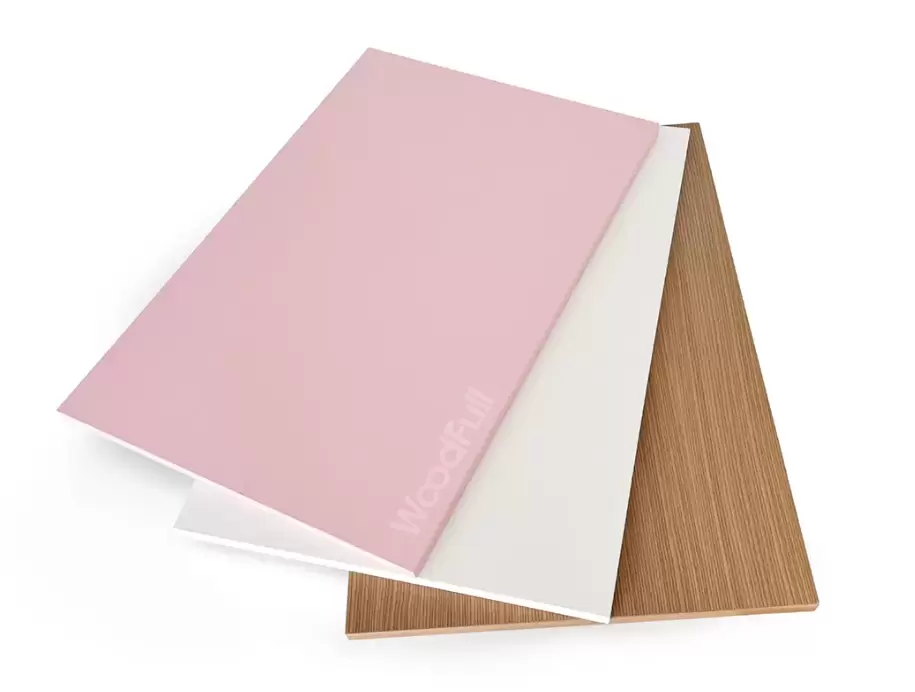
Choosing a color MDF board based only on appearance can lead to problems during machining, assembly, transportation, or long-term use. A more reliable selection process considers the complete furniture application, from panel dimensions and edge treatment to cleaning conditions and expected service life.
Furniture components perform different functions, so they do not necessarily require the same board specifications.
A cabinet door requires a stable panel with a consistent decorative surface. Its appearance is especially important because the front face remains visible during daily use. Wardrobe side panels and partitions may place greater emphasis on dimensional stability, thickness consistency, and mechanical performance.
Shelving components must also be selected according to their span and expected loading. A board that performs adequately as a decorative back panel may not provide sufficient stiffness for a long shelf carrying heavy objects.
Color MDF board selection should therefore begin with the component's structural role. Panel thickness, support spacing, loading conditions, and fixing methods should be considered together rather than relying on a general assumption that one thickness suits every application.
The decorative surface directly affects the appearance and maintenance requirements of furniture. Matte, semi-gloss, and high-gloss finishes create different visual effects and may have different resistance characteristics.
Matte surfaces are often selected for contemporary furniture designs where reflections need to be limited. High-gloss finishes provide a more reflective appearance but may make fingerprints, scratches, and surface imperfections more noticeable.
The actual durability depends on the surface material and finishing process. Buyers should not assume that all colored MDF surfaces have the same resistance to abrasion, impact, stains, or household cleaning products.
For frequently used furniture, such as kitchen cabinet doors, office desks, and retail counters, surface performance should be tested under conditions that reflect actual use. Relevant evaluations may include scratch resistance, abrasion resistance, stain resistance, and cleaning compatibility.
The cleaning method also matters. A surface may tolerate ordinary wiping but become damaged by aggressive solvents or abrasive cleaning tools. Maintenance recommendations should therefore be consistent with the finish manufacturer's instructions.
One of the main advantages of MDF is its relatively uniform structure, which supports routing, drilling, and profile machining. This makes it suitable for furniture components requiring decorative edges, recessed details, and precise hardware installation.
However, machining performance still depends on substrate quality and tool conditions. Dull cutting tools, incorrect feed rates, and unsuitable machining parameters can produce rough edges, chipping, or surface damage.
Edge treatment is particularly important because MDF edges are more exposed than the finished panel face. Depending on the design, manufacturers may use edge banding, paint, specialized coatings, or other finishing methods to protect the exposed substrate and improve appearance.
The selected edge treatment should be compatible with the board surface and the intended service environment. For furniture used in kitchens or other areas with occasional moisture exposure, edge sealing and joint protection deserve additional attention.
Before approving a color MDF board for production, a machining trial can reveal issues that are difficult to identify from a flat sample. The trial should include cutting, drilling, edge finishing, and hardware installation where relevant.
Moisture exposure is a major consideration when using MDF in interior furniture. Standard MDF is generally designed for indoor use under controlled conditions. Changes in humidity or direct contact with water may affect its dimensions and mechanical properties.
Kitchen cabinets are a useful example. Although the visible decorative surface may be easy to clean, water can enter through unprotected edges, joints, screw holes, and damaged areas. Once moisture reaches the substrate, swelling may occur depending on the board grade and exposure conditions.
For applications involving higher humidity, buyers should evaluate whether moisture-resistant MDF is required. They should also confirm the actual test performance rather than treating a decorative surface as proof of waterproof construction.
التصميم الجيد للأثاث يمكن أن يقلل من المخاطر المرتبطة بالرطوبة. تساهم الحواف المختومة والمفاصل المحمية والأجهزة المناسبة وتفاصيل التثبيت في عمر خدمة المنتج النهائي.
يتم تقييم مواد الأثاث الداخلي بشكل متزايد وفقًا لأدائها البيئي والانبعاثات. تعتبر انبعاثات الفورمالديهايد ذات أهمية خاصة لأنه قد يتم تركيب الأثاث والألواح الداخلية في أماكن مغلقة للمعيشة أو العمل.
يعد نظام اللصق المستخدم في الألواح الخشبية أحد العوامل التي تؤثر على أداء الانبعاثات. وتشمل العوامل الأخرى المواد الخام، وظروف التصنيع، والمعالجات السطحية، وبناء منتج الأثاث النهائي.
تركز شركة Shandong Xingang Group Co., Ltd. على المواد الخشبية ذات التوجه البيئي، وقد طورت مادة لاصقة محاكاة حيوية لـ Xingang، والتي تصفها الشركة بأنها تحتوي على صفر من الفورمالديهايد، وصفر من البنزين، وصفر من المواد الضارة. تم تطبيق هذا اللاصق على نطاق واسع في ألواح Xingang المزخرفة ذات المحاكاة الحيوية، وألواح MDF فائقة الرقة، والخشب الرقائقي البحري المحاكي الحيوي.
بالنسبة للوحة MDF ذات لون معين، يجب تأكيد الأداء البيئي من خلال الوثائق الخاصة بالمنتج النهائي. يجب على المشترين مراجعة تقارير اختبار الانبعاثات المعمول بها، ونطاق الاعتماد، والبنية الدقيقة للمنتج بدلاً من افتراض أن أداء مادة لاصقة واحدة ينطبق تلقائيًا على كل لوحة.
تصبح مطابقة الألوان أكثر صعوبة عندما يتم تصنيع مكونات الأثاث على دفعات منفصلة أو يتم توفيرها خلال فترة مشروع ممتدة. حتى الاختلافات الصغيرة في التشطيبات الزخرفية يمكن أن تصبح ملحوظة عند تركيب الألواح المتجاورة معًا.
يجب أن تستخدم عملية الموافقة على الألوان الموثوقة عينات مادية ومراجع موثقة بوضوح. يجب تقييم اللون في ظل ظروف إضاءة متسقة، ويجب الاحتفاظ بالعينة المعتمدة كمرجع للطلبات اللاحقة.
بالنسبة للمشاريع الأكبر حجمًا، يجب على الشركات المصنعة أيضًا تأكيد ما إذا كان المورد يمكنه الحفاظ على مظهر سطحي ثابت عبر عمليات الإنتاج المتكررة. تسهل سجلات تحديد الدُفعات والإنتاج التحقيق في الاختلافات في حالة حدوثها.
عندما تستخدم العديد من مكونات الأثاث نفس لون لوح MDF، فمن المفيد التفكير في كيفية تفاعل تشطيب السطح مع نطاقات الحواف والمقابض والإطارات المعدنية والزجاج والمواد الأخرى. يعتمد التصميم الناجح على مجموعة المواد الكاملة، وليس فقط على اللوحة نفسها.
يجب أن يقدم مورد ألواح MDF الملونة معلومات واضحة حول نوع الركيزة وكثافتها وسمكها وأبعادها وتشطيب السطح وخيارات الألوان ومعايير الجودة المعمول بها. يجب على المشترين أيضًا تأكيد ما إذا كان من الممكن دعم المواصفات المخصصة والأوامر المتكررة.
For furniture manufacturing, the supplier's ability to maintain stable production quality is often as important as the initial sample. Consistent dimensions, reliable surface quality, appropriate packaging, and traceable batch information help reduce production interruptions.
A structured sample evaluation is recommended before bulk purchasing. The sample should be tested using the same cutting, drilling, edge treatment, and assembly methods planned for the actual furniture.
Color MDF board can support a wide range of furniture and interior applications, but its performance depends on the relationship between substrate quality, decorative finish, machining requirements, moisture management, and environmental properties.
By evaluating these factors before production, manufacturers can reduce material-related defects and achieve more consistent finished products. A well-selected color MDF board should meet both the visual requirements of the design and the practical demands of manufacturing and everyday use.